



Earnings Season Begins With Market-Defining Reports
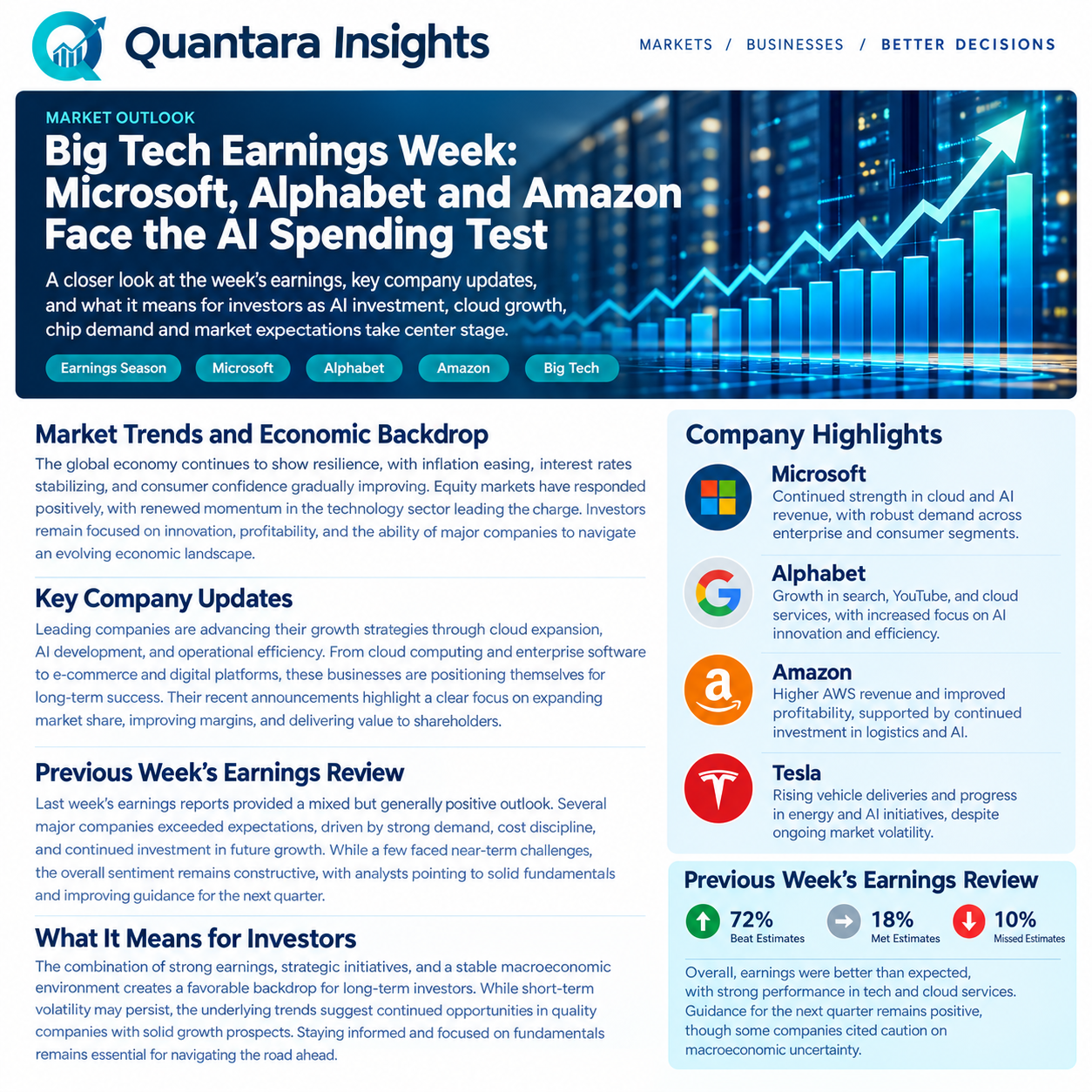
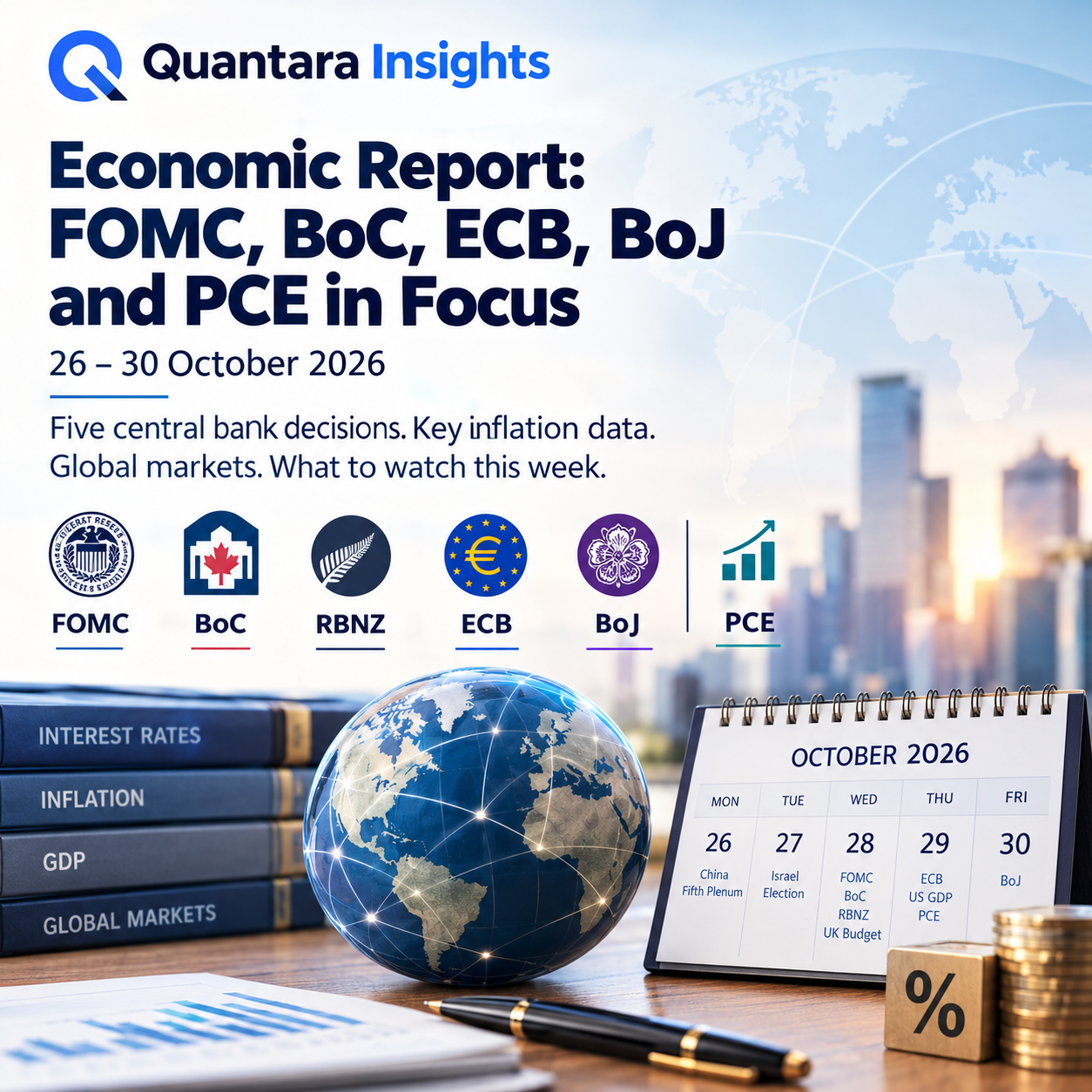
Earnings Season enters one of its most important weeks of 2026 as some of the world’s largest companies prepare to release quarterly results. Investors will closely monitor reports from Alphabet, Tesla, Intel, Texas Instruments, IBM, ServiceNow, Nokia, GE Vernova, and dozens of other market leaders whose results have the potential to influence not only their respective industries but also broader market sentiment.
With the S&P 500 trading near record highs and artificial intelligence continuing to dominate investment themes, expectations have risen considerably heading into this reporting period. Revenue growth remains healthy across several technology sectors, but investors are increasingly focused on profitability, capital spending, free cash flow, and management guidance rather than simply headline earnings.
This week’s Earnings Season is expected to provide valuable insight into the health of corporate America during the second half of 2026. The concentration of mega-cap technology companies reporting within a single week also creates the potential for increased market volatility as investors digest new information.
Unlike previous quarters where macroeconomic concerns dominated headlines, this reporting period is expected to revolve around several major themes:
- Artificial intelligence investment
- Cloud computing growth
- Data center demand
- Semiconductor spending
- Capital expenditure trends
- Consumer demand
- Enterprise software adoption
- Margin expansion
- Cash flow generation
- Forward guidance
These themes will likely determine whether the current market rally can continue through the remainder of the year.
Why This Week Matters for Investors
Few weeks during any Earnings Season carry the importance of this one.
The reporting calendar features companies representing nearly every major sector of the economy, including technology, semiconductors, financial services, industrials, healthcare, transportation, entertainment and consumer discretionary.
Technology remains the primary focus.
Alphabet and Tesla alone account for hundreds of billions of dollars in market capitalization, while Intel, Texas Instruments, IBM and ServiceNow collectively provide investors with valuable insight into enterprise spending, artificial intelligence adoption, semiconductor demand and cloud infrastructure.
Financial companies also continue reporting after a strong opening week for the banking sector. Their results will help investors evaluate lending activity, consumer spending, credit quality and capital markets performance during an environment of relatively stable interest rates.
Meanwhile, industrial companies including GE Vernova, RTX and Canadian National Railway will offer another important perspective on infrastructure spending, manufacturing demand and global economic activity.
Taken together, this week’s reports will create one of the clearest snapshots yet of corporate earnings momentum heading into the second half of 2026.
Alphabet and Tesla Take Center Stage
No two companies are likely to attract more attention during this Earnings Season than Alphabet and Tesla.
Both companies report on Wednesday and together represent two of the most influential names in global equity markets.
Their earnings releases frequently move not only their own shares but also the broader Nasdaq and technology sector.
Alphabet Looks to Extend AI Leadership
Alphabet enters the week with strong momentum following another quarter of accelerating cloud growth and expanding operating margins.
Google Cloud continues to benefit from sustained enterprise demand for artificial intelligence infrastructure, while Search remains remarkably resilient despite increasing competition from AI-powered alternatives.
Investors will pay particular attention to several key metrics:
- Google Cloud revenue growth
- Operating margin expansion
- AI infrastructure spending
- Capital expenditure outlook
- Search advertising performance
- YouTube monetization
- Subscription growth
- Free cash flow generation
One of the biggest questions surrounding Alphabet is whether management can continue justifying its elevated capital spending.
The company has significantly increased investment in AI infrastructure, data centers and custom silicon, reflecting management’s confidence in long-term demand. Investors generally support these investments, but they also want evidence that higher spending continues producing accelerating revenue growth.
Cloud backlog growth, enterprise customer adoption and margin performance remain among the most important indicators investors will watch during management’s conference call.
Should Alphabet deliver another combination of strong cloud growth and disciplined expense management, confidence in the broader artificial intelligence investment cycle could strengthen further.
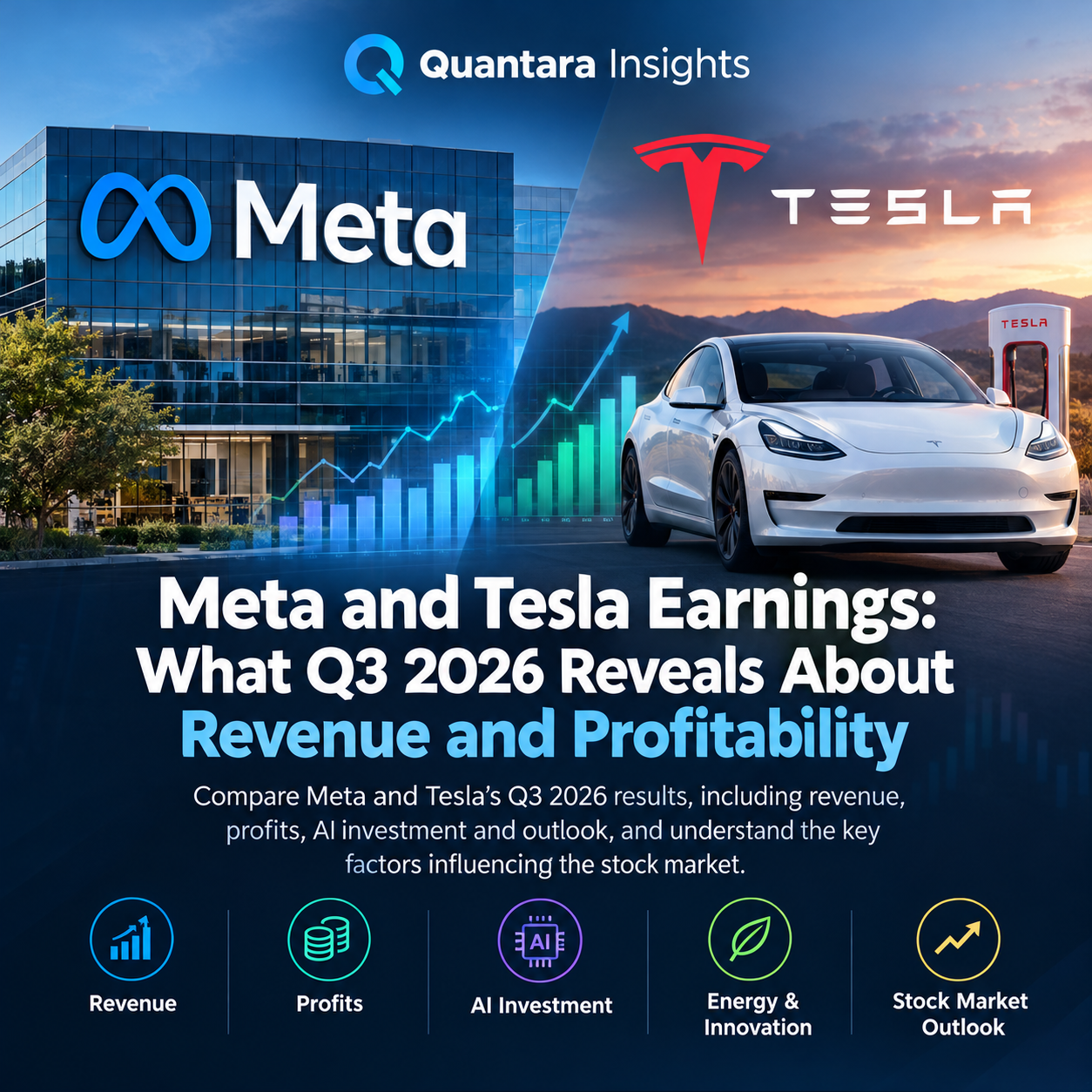
Tesla Faces Another Critical Quarter
Tesla once again headlines Earnings Season, but this quarter arrives with a slightly different narrative.
Instead of focusing exclusively on vehicle deliveries, investors increasingly want answers regarding profitability, autonomous driving technology and long-term capital allocation.
Recent improvements in automotive margins have encouraged investors, while growing adoption of Full Self-Driving technology continues expanding higher-margin software revenue.
The company’s Robotaxi initiative also represents a major strategic milestone.
Several important developments have improved investor sentiment entering the report:
- Higher automotive margins
- Growing Full Self-Driving adoption
- Expanding Robotaxi rollout
- Stronger European demand
- Improving production efficiency
- Stable battery costs
Despite these positives, investors remain cautious regarding Tesla’s aggressive investment strategy.
Management has committed to substantial capital expenditures as the company expands manufacturing capacity, artificial intelligence infrastructure and autonomous driving initiatives.
Higher spending naturally places greater pressure on free cash flow, making management’s long-term outlook especially important.
For this reason, investors will focus less on quarterly earnings and more on management commentary surrounding:
- Future capital expenditures
- Cash flow expectations
- Vehicle demand
- Gross margins
- Robotaxi expansion
- Energy storage growth
- AI computing investments

Tesla remains one of the most closely watched companies every Earnings Season, and another large share-price move following results would surprise few market participants.
Big Tech Headlines an Important Week
Although Alphabet and Tesla receive much of the attention, they are far from the only influential technology companies reporting.
Enterprise software, cloud infrastructure and legacy technology firms will also provide important updates on corporate technology spending.
ServiceNow
ServiceNow enters the week after continued expansion of its artificial intelligence platform across enterprise customers.
Management has successfully positioned AI-assisted workflow automation as a major growth driver, although investors remain focused on profitability following recent acquisitions and integration costs.
This quarter will likely center around two questions:
First, can artificial intelligence continue driving higher subscription revenue?
Second, will margins stabilize as integration expenses gradually decline?
Strong answers to both questions could significantly improve investor confidence.
IBM
IBM continues its multi-year transformation toward software, hybrid cloud and artificial intelligence services.
Recent improvements across Red Hat, software subscriptions and consulting bookings suggest the transformation remains on track.
However, investors also want greater evidence that infrastructure softness has stabilized while margins continue expanding despite ongoing investments.
Management’s guidance may prove just as important as quarterly results, particularly regarding software growth, consulting demand and free cash flow expectations.
Nokia
Nokia has quietly become one of the more interesting companies entering this Earnings Season.
Demand for networking infrastructure supporting artificial intelligence and cloud computing continues strengthening, helping improve revenue expectations across several business segments.
Network Infrastructure remains the company’s strongest growth engine as cloud providers continue expanding high-speed connectivity.
Investors will also evaluate:
- Optical networking demand
- IP routing growth
- AI infrastructure orders
- Integration progress
- Gross margin performance
- Long-term guidance
While Nokia may not receive the same headlines as Alphabet or Tesla, its results could provide valuable insight into broader AI infrastructure spending across global telecommunications and cloud providers.
Semiconductor Leaders Face High Expectations
The semiconductor industry remains one of the most closely watched areas of this Earnings Season, with investors looking beyond quarterly results to gauge the strength of artificial intelligence spending, enterprise technology investment and long-term demand for advanced computing infrastructure.
While enthusiasm surrounding AI has fueled strong performance across many chipmakers, expectations have also climbed sharply. As a result, management commentary and forward guidance may prove even more influential than the reported numbers themselves.
Intel and Texas Instruments headline this week’s semiconductor calendar, but their businesses provide insight into very different segments of the market.
Intel Looks to Build on Improving Momentum
Intel enters this Earnings Season with considerably stronger momentum than it enjoyed just a year ago.
After several quarters focused on restructuring, manufacturing execution and product competitiveness, the company has gradually shifted investor attention toward improving financial performance and expanding opportunities across data centers and artificial intelligence.
Recent results demonstrated meaningful progress.
Revenue has stabilized, margins have improved and management has become increasingly confident in demand across enterprise computing and server processors. The company has also continued expanding relationships with leading technology companies while advancing its foundry strategy.
Several themes will dominate Intel’s earnings release.
Data Center Demand
Enterprise spending remains one of the most important drivers of Intel’s outlook.
Investors want confirmation that demand for next-generation server processors continues improving as businesses expand artificial intelligence infrastructure and modernize existing data centers.
Strong enterprise demand would reinforce the broader investment cycle currently benefiting many semiconductor companies.
Manufacturing Execution
Intel’s manufacturing roadmap remains central to its long-term investment thesis.
Progress on advanced process technologies, production yields and foundry customer commitments will receive close attention during management’s conference call.
Consistent execution would strengthen confidence that Intel can continue narrowing the competitive gap while attracting additional external manufacturing customers.
Margin Expansion
Profitability has steadily improved over recent quarters.
Investors will monitor whether gross margins continue recovering as production volumes increase and higher-value products represent a larger share of revenue.
Management’s outlook for operating expenses will also remain an important consideration as the company balances investment with profitability.
Key Areas to Watch
Investors should closely monitor:
- Data center revenue
- AI-related demand
- Gross margin performance
- Manufacturing progress
- Enterprise customer activity
- Foundry updates
- Capital spending plans
- Second-half guidance
Although expectations have increased, Intel appears to enter this reporting period with improving business fundamentals and greater operational stability than in previous quarters.
Texas Instruments Benefits from Broad-Based Industrial Demand
Unlike many semiconductor companies heavily dependent on consumer electronics, Texas Instruments derives much of its revenue from industrial and automotive customers.
That diversification has helped create a more balanced growth profile while reducing exposure to short-term swings in consumer demand.
Heading into this Earnings Season, investors remain optimistic following encouraging improvements across several business segments.
Industrial automation continues generating healthy demand, while communications infrastructure and data center applications have also strengthened.
Industrial Markets Continue Leading Growth
Factory automation, robotics, renewable energy infrastructure and industrial control systems continue supporting demand for analog and embedded semiconductor products.
These long-duration investment trends provide greater visibility than many consumer-driven markets.
Management will likely discuss order activity across:
- Manufacturing automation
- Industrial equipment
- Renewable energy
- Data centers
- Communications infrastructure
- Medical devices
Automotive Remains an Important Variable
Automotive demand has stabilized but remains mixed across global markets.
Investors will be looking for updated commentary regarding electric vehicle production, inventory normalization and semiconductor content per vehicle.
Improvement in automotive orders would provide another positive signal for the broader industrial economy.
Pricing and Inventory
Inventory trends have improved significantly across the semiconductor industry.
Texas Instruments’ commentary regarding customer inventory levels, pricing discipline and future order patterns could provide useful insight into whether the industry’s recovery remains sustainable throughout the remainder of 2026.
Financial Companies Continue Setting the Market Tone
Although technology companies dominate headlines, financial institutions continue playing a vital role during this Earnings Season.
The banking sector produced a strong opening week, with trading activity, investment banking and capital markets revenue exceeding expectations at many major institutions.
That positive backdrop now shifts attention toward additional financial companies reporting this week.
Among those attracting investor attention are:
- American Express
- Capital One Financial
- Charles Schwab
- Chubb
- Moody’s
- Interactive Brokers
- Zions Bancorporation
- East West Bancorp
Collectively, these companies provide a broader picture of consumer spending, lending activity, investment trends and overall financial market health.
American Express
American Express remains closely tied to higher-income consumer spending.
Investors will evaluate card spending trends, loan performance and management’s outlook for travel and entertainment expenditures.
Resilient consumer activity would reinforce confidence in discretionary spending despite ongoing macroeconomic uncertainty.
Charles Schwab
Charles Schwab offers valuable insight into retail investing activity.
Higher client assets, trading volumes and cash balances would indicate continued investor engagement across financial markets.
Commentary surrounding interest income and brokerage activity will also receive close attention.
Capital One
Capital One’s report will provide another important update on consumer credit quality.
Delinquency trends, loan growth and management’s economic outlook will help investors assess the health of household finances.
Stable credit performance would support the broader narrative of a resilient consumer.
Industrials and Energy Companies Offer Economic Insight
Industrial companies often provide one of the clearest views into real economic activity during Earnings Season.
Infrastructure investment, manufacturing output, transportation demand and power generation all influence the outlook for this sector.
This week features several notable industrial companies led by GE Vernova, RTX, Canadian National Railway and CSX.
GE Vernova Continues Building Momentum
GE Vernova has emerged as one of the strongest industrial growth stories entering this reporting period.
Demand remains exceptionally strong across power generation, electrification and grid modernization as governments and private companies continue investing heavily in energy infrastructure.
Backlog growth has remained impressive, providing greater revenue visibility over multiple years.
Investors will focus on:
- Order growth
- Margin expansion
- Free cash flow
- Grid modernization demand
- Gas turbine activity
- Renewable energy performance
- Data center electricity demand
One particularly important theme involves electricity demand from artificial intelligence infrastructure.
Rapid construction of large-scale data centers has increased demand for power generation equipment, transmission systems and electrical infrastructure.
This trend has become an increasingly meaningful growth driver for GE Vernova.
Wind Business Remains the Primary Challenge
While most business segments continue performing well, wind energy remains a relative weakness.
Management has acknowledged ongoing profitability challenges within that division, although losses have gradually become more manageable.
Investors will evaluate whether continued strength elsewhere more than offsets those headwinds.
Consumer Companies Face a More Challenging Environment
Consumer-focused companies enter this Earnings Season with greater uncertainty than many technology businesses.
Higher living costs, changing spending priorities and increased promotional activity continue creating pressure across several industries.
Two companies attracting significant attention this week are Domino’s Pizza and AMC Entertainment.
Domino’s Pizza Tests Consumer Spending
Domino’s faces a more difficult operating environment than it experienced during previous years.
Comparable sales growth has slowed, competitive pricing has intensified and consumers have become increasingly selective regarding discretionary purchases.
Investors will focus on several important questions:
- Has same-store sales stabilized?
- Are delivery volumes improving?
- Can international markets return to stronger growth?
- How are margins holding up?
- Is digital ordering continuing to expand?
Technology investments and operational improvements remain long-term positives, but investors will want evidence that these initiatives are translating into stronger financial performance.
AMC Entertainment Looks to Sustain Recovery
AMC enters this Earnings Season following noticeable improvement in operating performance.
The recovery in theatrical attendance has strengthened revenue while operational efficiencies have helped improve profitability.
Several areas deserve close attention:
- Box office performance
- Premium format attendance
- Food and beverage spending
- Balance sheet improvements
- New entertainment initiatives
- Cash flow trends
Management has also introduced new live entertainment offerings designed to diversify revenue beyond traditional movie releases.
Investors will be watching closely for early indications that these initiatives can generate meaningful long-term growth while reducing reliance on blockbuster film releases.
Healthcare Companies Continue Navigating a Mixed Operating Environment
Healthcare companies enter this Earnings Season facing a combination of improving operational trends and persistent industry-specific challenges. While patient demand has generally remained stable, hospitals, insurers and medical technology companies continue balancing higher operating costs, reimbursement pressures and evolving regulatory requirements.
This week’s reports from Community Health Systems and several healthcare-related companies will provide another valuable update on the sector’s overall health.
Community Health Systems Focuses on Operational Improvement
Community Health Systems enters this reporting period with investors closely watching patient volumes, profitability and debt reduction efforts.
Although the company continues making progress strengthening its balance sheet, hospital operators remain sensitive to changes in patient admissions, labor expenses and reimbursement rates.
Several developments could influence investor sentiment.
Patient Volumes
Hospital admissions and outpatient procedures remain the foundation of long-term earnings growth.
Investors will look for signs that patient demand has stabilized following softer trends reported during the previous quarter.
Improvements across emergency departments, surgical procedures and inpatient admissions would support management’s outlook for stronger second-half performance.
Financial Position
Balance sheet improvement remains another major priority.
The company has continued reducing leverage through asset sales and disciplined capital allocation, strengthening its long-term financial flexibility.
Investors will monitor:
- Debt reduction
- Operating margins
- EBITDA trends
- Cash flow generation
- Acquisition integration
- Cost management

A combination of improving operating performance and continued deleveraging would represent another constructive step forward.
Additional Companies Worth Watching During Earnings Season
While mega-cap technology companies dominate headlines, several other businesses reporting this week could provide important insights into broader economic conditions.
These companies may not generate the same market-moving attention as Alphabet or Tesla, but their results often offer valuable signals regarding transportation, communications, aerospace, consumer spending and industrial demand.
RTX
RTX remains an important barometer for aerospace and defense spending.
Commercial aviation continues recovering steadily, while defense budgets remain supportive of long-term growth.
Investors will focus on:
- Commercial aerospace demand
- Defense contract activity
- Supply chain improvements
- Margin performance
- Cash flow generation
Canadian National Railway
Rail transportation often reflects broader economic activity.
Canadian National’s earnings will provide insight into freight volumes, industrial production and international trade.
Strong shipment activity would reinforce expectations for stable economic growth during the second half of the year.
CSX
CSX offers another perspective on North American freight demand.
Management commentary regarding manufacturing shipments, intermodal traffic and pricing trends will help investors evaluate the health of the industrial economy.
Airlines Remain Sensitive to Costs
American Airlines, Southwest Airlines and Alaska Air continue operating within an environment of resilient travel demand but elevated operating costs.
Fuel prices remain one of the largest variables affecting profitability.
Investors will closely monitor:
- Passenger demand
- Premium travel
- Corporate bookings
- Fuel expense
- Capacity growth
- Profit margins
Although travel demand has generally remained healthy, changing fuel prices and competitive pricing continue influencing earnings expectations across the airline industry.
Comcast and Charter Communications
Cable and broadband providers remain under pressure as competition intensifies across traditional television and internet services.
Management commentary surrounding subscriber trends, broadband additions and wireless expansion will receive significant attention.
The broader investment focus has shifted toward customer retention and profitability rather than subscriber growth alone.
Lamb Weston
Lamb Weston provides another useful measure of consumer spending within the restaurant industry.
Demand from quick-service restaurants, food inflation and pricing strategies will all influence investor sentiment.
While food service demand remains relatively stable, investors continue monitoring restaurant traffic and consumer purchasing behavior for signs of changing spending patterns.
Key Themes Investors Should Watch Throughout Earnings Season
Although every company tells a unique story, several common themes have emerged across this Earnings Season.
These broader trends will likely determine market performance well beyond individual quarterly reports.
Artificial Intelligence Investment
Artificial intelligence remains the single most important investment theme across the technology sector.
Companies continue increasing spending on:
- Data centers
- Graphics processors
- Cloud infrastructure
- Enterprise software
- Networking equipment
- Power infrastructure
Investors generally support these investments, provided revenue growth continues justifying higher capital expenditures.
Capital Spending
Large technology companies continue committing unprecedented levels of capital toward expanding computing infrastructure.
Management teams now face increasing pressure to demonstrate measurable returns on these investments.
Future guidance surrounding capital expenditures could become one of the biggest drivers of market performance throughout the remainder of the year.
Margin Expansion
Revenue growth remains important, but investors have become increasingly focused on profitability.
Companies capable of simultaneously growing revenue while expanding operating margins are generally receiving the strongest market reactions.
Conversely, businesses showing higher expenses without corresponding revenue acceleration have faced greater scrutiny.
Cash Flow
Free cash flow continues separating market leaders from weaker performers.
Investors increasingly value businesses capable of funding long-term growth while maintaining healthy balance sheets and returning capital to shareholders.
Forward Guidance
Perhaps no single element influences stock prices more than management guidance.
Markets have largely looked beyond quarterly results and focused instead on executive commentary regarding:
- Revenue outlook
- Profit margins
- Capital spending
- Customer demand
- Hiring plans
- Artificial intelligence investment
- Economic conditions
Companies providing confident guidance have generally been rewarded, while cautious outlooks have often outweighed otherwise strong quarterly performance.
Last Week’s Earnings Recap: Banks Deliver Strong Results While AI Leaders Continue Building Momentum
The opening week of Earnings Season delivered a clear message to investors: corporate America continues demonstrating resilience despite elevated expectations.
The strongest performances came from the financial sector, where robust capital markets activity, investment banking and trading revenue helped many of the nation’s largest banks exceed expectations.
Technology companies also reinforced the long-term artificial intelligence investment narrative, while several healthcare and industrial businesses produced more mixed results.
Rather than one dominant theme, the week’s reports highlighted a market increasingly rewarding operational discipline, improving margins and confident forward guidance.
JPMorgan Chase Sets the Tone
JPMorgan Chase once again demonstrated why it remains the benchmark for the U.S. banking industry.
Strong investment banking activity, healthy trading revenue and continued growth across its core businesses helped produce another impressive quarter.
Equity trading remained a standout contributor as market volatility and elevated client activity supported results.
Management also maintained a constructive outlook, although executives acknowledged that current capital markets conditions have been unusually favorable and may gradually normalize over time.
For investors, JPMorgan reinforced confidence that the largest financial institutions continue benefiting from diversified revenue streams and disciplined expense management.
Goldman Sachs Benefits from Active Capital Markets
Goldman Sachs delivered one of the strongest reports among major financial institutions.
Investment banking activity accelerated meaningfully while trading operations benefited from elevated client engagement across both equity and fixed-income markets.
Corporate financing activity also continued improving as companies gradually returned to capital markets.
The results underscored a broader trend developing throughout this Earnings Season: businesses tied to mergers, acquisitions and capital raising are seeing steadily improving conditions after several slower years.
Morgan Stanley Continues Expanding Wealth Management
Morgan Stanley produced another strong quarter supported by record client assets and healthy trading performance.
Its wealth management division continues providing stable recurring revenue while institutional securities benefited from active financial markets.
The company also continued expanding client assets under management, reinforcing the long-term value of its diversified business model.
For investors, the report highlighted the growing importance of fee-based businesses alongside traditional investment banking operations.
Bank of America Shows Stable Consumer Activity
Bank of America’s results suggested that consumer spending remains relatively resilient.
Loan quality remained healthy, fee income improved and management expressed confidence regarding net interest income trends.

Although interest rate expectations continue evolving, consumer activity has remained stronger than many analysts anticipated earlier in the year.
The report offered another encouraging sign that household finances remain generally stable heading into the second half of 2026.
Citigroup Continues Executing Its Transformation
Citigroup reported improving financial performance while continuing its long-term restructuring strategy.
Management emphasized progress simplifying operations and improving profitability across its global businesses.
Despite stronger financial results, investors remained focused on expense management and execution, illustrating that expectations have increased considerably following several quarters of operational improvement.
Wells Fargo Continues Its Recovery
Wells Fargo reported another quarter reflecting gradual operational progress.
Investment banking activity improved while the company continued benefiting from increased strategic flexibility following regulatory changes.
However, investors remained attentive to pressure on net interest margins as competition for deposits continued influencing profitability.
The overall report nevertheless reinforced confidence that the bank’s turnaround remains firmly on track.
UnitedHealth Group Extends Its Recovery
UnitedHealth Group delivered one of the strongest healthcare reports of the week, continuing the operational recovery that management has been working toward throughout 2026.
The company reported another quarter of improving profitability while raising its full-year outlook, reinforcing confidence that operational initiatives are beginning to produce measurable results. Performance improved across both its insurance and healthcare services businesses, with management highlighting stronger execution, disciplined cost controls and continued progress simplifying operations.
One of the most encouraging developments was another increase in full-year guidance. Multiple upward revisions during the year suggest management has become increasingly confident in the business outlook rather than simply benefiting from a single strong quarter.
Investors also welcomed stronger capital returns through share repurchases and dividend growth, reflecting confidence in the company’s cash generation.
However, several challenges remain.
Commercial healthcare costs continue trending higher than historical averages, while Medicaid profitability remains under pressure. These issues are unlikely to disappear quickly, and management acknowledged that some margin recovery initiatives may take longer than originally anticipated.
Even so, the broader message was constructive. UnitedHealth demonstrated that disciplined execution and improving operational efficiency can offset many of the industry’s ongoing headwinds, making it one of the stronger healthcare stories to emerge during this Earnings Season.
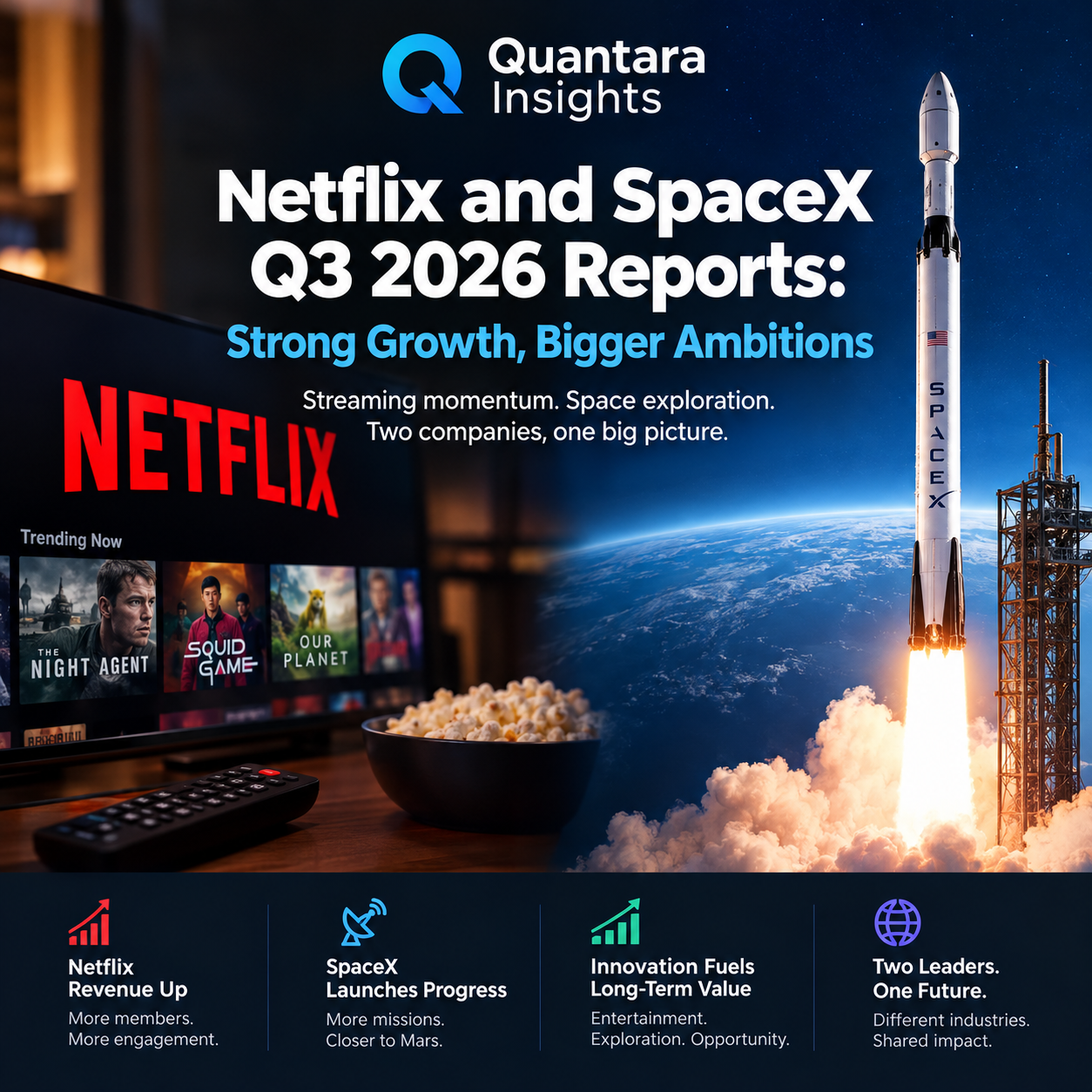
Netflix Delivers Stable Growth While Focusing on Organic Expansion
Netflix reported another quarter that reinforced the strength of its core streaming business while highlighting a strategic shift toward organic growth rather than major acquisitions.
Revenue continued expanding at a healthy pace, supported by subscriber engagement, advertising initiatives and international markets. While earnings were generally in line with expectations, investors focused more on management’s long-term strategy than the quarterly figures themselves.
Several newer initiatives continue gaining traction, including cloud gaming, artificial intelligence tools for content production and expanded partnerships in international markets. These investments reflect Netflix’s effort to broaden its ecosystem while improving operating efficiency.
Management also reaffirmed its commitment to disciplined capital allocation through ongoing share repurchases and stable margin targets.
Looking ahead, investors will watch:
- Subscriber engagement
- Advertising revenue
- International expansion
- Content spending
- Operating margins
- Free cash flow
Netflix’s report suggested a business that continues to generate consistent growth without relying on transformational acquisitions, providing investors with greater confidence in the company’s long-term strategy.
TSMC Reinforces the Artificial Intelligence Investment Cycle
Among semiconductor companies reporting last week, Taiwan Semiconductor Manufacturing Company delivered one of the clearest signals that artificial intelligence investment remains exceptionally strong.
Revenue growth continued accelerating as demand for advanced semiconductor manufacturing remained robust across cloud computing, AI processors and high-performance computing applications.
Perhaps more importantly, management issued an optimistic outlook for upcoming quarters, indicating that customer demand continues exceeding previous expectations.
For investors, TSMC’s results extend well beyond one company.
As the world’s leading semiconductor foundry, its order book often provides one of the earliest indicators of technology spending across the broader industry.
Strong guidance therefore supports positive expectations for companies throughout the semiconductor ecosystem, including equipment manufacturers, networking providers and enterprise infrastructure companies reporting during this Earnings Season.
ASML Continues Benefiting From AI Infrastructure Spending
ASML delivered another impressive quarter, reinforcing its position at the center of the global semiconductor supply chain.
Demand for advanced lithography systems remains exceptionally strong as leading chip manufacturers continue expanding production capacity to support artificial intelligence applications.
Management again raised its outlook, reflecting growing confidence that investment in advanced semiconductor manufacturing will remain elevated for years rather than quarters.
Several themes stood out:
- Strong demand for advanced manufacturing equipment
- Continued expansion of AI-related investment
- Healthy gross margins
- Long-term order visibility
- Growing customer commitments
Although supply constraints and production timelines remain challenges, the broader demand environment continues improving.
For investors, ASML’s results provide another indication that artificial intelligence infrastructure spending remains supported by genuine customer demand rather than short-term market enthusiasm.
Intuitive Surgical Demonstrates Margin Strength Despite Moderating Procedure Growth
Intuitive Surgical reported another solid quarter highlighted by strong profitability and continued innovation across its robotic surgery platform.
Procedure volumes continued expanding, although growth moderated modestly compared with earlier periods. Investors interpreted this as normalization rather than deterioration, particularly given the company’s strong margin performance and healthy cash generation.
Management also highlighted progress introducing new products while expanding regulatory approvals across international markets.
Although procedure growth has become slightly more measured, long-term demand for minimally invasive surgery remains favorable.
The combination of recurring revenue, technological leadership and disciplined execution continues supporting Intuitive Surgical’s long-term investment case.
What This Earnings Season Means for Investors
As this Earnings Season enters one of its busiest weeks, several clear themes have emerged.
Artificial intelligence remains the dominant force shaping corporate investment decisions, but investors are increasingly demanding evidence that these investments translate into sustainable revenue growth, stronger margins and expanding cash flow.
Technology companies continue leading market performance, yet expectations have also risen significantly. Quarterly results alone are no longer enough. Companies must demonstrate disciplined capital allocation, improving profitability and confidence in future demand.
Financial institutions have largely reinforced confidence in the health of the U.S. economy through resilient consumer activity, strong capital markets and stable credit quality.
Industrial companies continue benefiting from infrastructure investment, while healthcare businesses are gradually improving operational efficiency despite ongoing cost pressures.
Consumer-facing companies remain the most mixed group, reflecting changing spending patterns and increased competition across several industries.
Overall, this reporting period is shaping up to be one of the most informative Earnings Seasons of the year, offering investors valuable insight into corporate confidence, economic momentum and the durability of the current market rally.
Final Thoughts
Earnings Season reaches a critical point this week as Alphabet, Tesla and many of the world’s largest companies report results that will help shape investor expectations for the remainder of 2026.
The spotlight will understandably fall on Big Tech, where artificial intelligence investment, cloud computing growth and capital spending remain the defining themes. Alphabet’s cloud business, Tesla’s margin trajectory, Intel’s turnaround, Texas Instruments’ industrial exposure and ServiceNow’s enterprise AI strategy each represent important pieces of a much broader market narrative.
Outside technology, financial institutions continue demonstrating resilience through healthy trading activity, investment banking and stable consumer spending, while industrial companies remain supported by long-term infrastructure and electrification trends.
Not every sector faces the same opportunities. Consumer businesses continue navigating a more cautious spending environment, healthcare companies are balancing operational improvements against persistent cost pressures, and communications providers are adapting to increasingly competitive markets. Even so, the broader picture remains constructive.
For investors, the focus should extend beyond headline earnings. Management guidance, free cash flow, operating margins and capital allocation decisions will likely determine which companies emerge as long-term winners during this Earnings Season.
As additional reports are released over the coming days, investors should expect increased volatility, but also greater clarity regarding the strength of corporate America, the sustainability of AI-driven investment and the outlook for earnings growth into 2027.