

Economic Report Overview
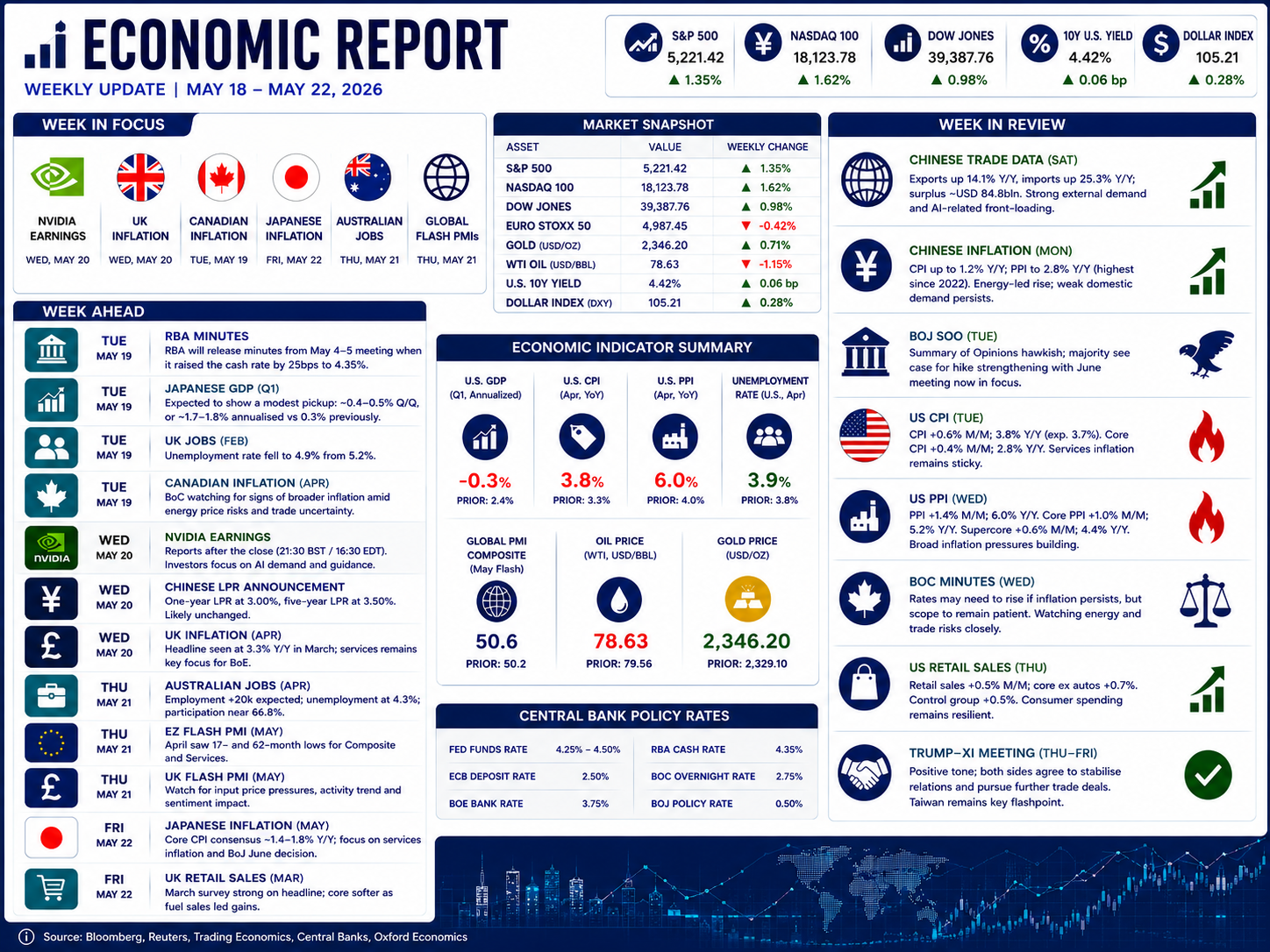
Economic report expectations are dominating global market sentiment as investors prepare for one of the most important macroeconomic weeks of the year. Nvidia earnings, inflation releases, flash PMIs, labor market updates and energy market volatility are all converging at the same time, creating heightened uncertainty across equities, bonds, currencies and commodities.
Markets are entering the week with concerns that inflation pressures may remain elevated longer than expected. Central banks across the world are increasingly worried that rising energy costs tied to geopolitical tensions could create another wave of price pressures. At the same time, economic growth indicators such as PMIs and labor market data continue to show mixed signals globally.
The economic report focus this week centers on several major catalysts:
- Nvidia earnings
- US inflation and producer price data
- UK inflation
- Japanese inflation
- Global PMIs
- Energy price volatility
- Central bank policy expectations
- Australian labor market data
- Chinese economic indicators
The combination of sticky inflation, elevated energy costs and uncertain growth conditions is creating a highly sensitive environment for global markets. Investors are watching every economic report closely because each release could significantly shift expectations for interest rates and monetary policy.
Why This Economic Report Matters for Global Markets
This economic report arrives during a period when markets remain extremely dependent on central bank guidance and economic momentum. Investors are trying to determine whether inflation is beginning to stabilize or whether rising energy prices and strong consumer spending will force policymakers to keep interest rates higher for longer.
Several critical themes are dominating this economic report cycle:
| Key Market Theme | Why It Matters |
|---|---|
| Inflation | Impacts interest rates and bond yields |
| Nvidia earnings | Measures AI investment momentum |
| PMIs | Signals economic expansion or contraction |
| Energy prices | Drives inflation and consumer costs |
| Labor market data | Influences central bank decisions |
The interaction between these themes is shaping market volatility across all major asset classes.

Nvidia Earnings Could Define AI Market Sentiment
Nvidia Remains the Center of the AI Boom
Nvidia remains one of the most closely watched companies in the world because it sits at the center of the artificial intelligence investment cycle. This economic report week places enormous attention on Nvidia earnings because the company has become a leading indicator for global technology spending.
Investor expectations remain extremely high after Nvidia projected revenue well above analyst estimates in prior quarters. Massive spending commitments from major technology firms continue to support bullish expectations for AI infrastructure demand.
Companies fueling Nvidia demand include:
- Amazon
- Microsoft
- Meta
- Alphabet
- Oracle
The market expects Nvidia revenue near USD 79 billion for the quarter, while analysts also project continued explosive growth into next year.
Why Nvidia Matters Beyond Technology Stocks
Nvidia earnings now impact broader market sentiment far beyond the technology sector. Strong Nvidia guidance could reinforce optimism about:
- Global economic growth
- AI investment trends
- Corporate spending
- Semiconductor demand
- Productivity growth
However, weak guidance or slowing AI demand could create sharp downside volatility across global equities.
The economic report attention on Nvidia reflects how deeply AI has become integrated into market expectations.
Inflation Remains the Biggest Risk
Energy Prices Are Fueling Inflation Pressures
Inflation continues to dominate every economic report because central banks remain worried that energy shocks could create another wave of persistent price increases.
Recent oil price spikes tied to geopolitical tensions are already feeding into transportation costs, manufacturing expenses and consumer prices globally.
Energy-driven inflation is impacting:
- Fuel prices
- Shipping costs
- Airline fares
- Manufacturing input costs
- Food transportation expenses
Central banks fear these pressures could spread into broader services inflation, making inflation much harder to control.
US Inflation Data Shocked Markets
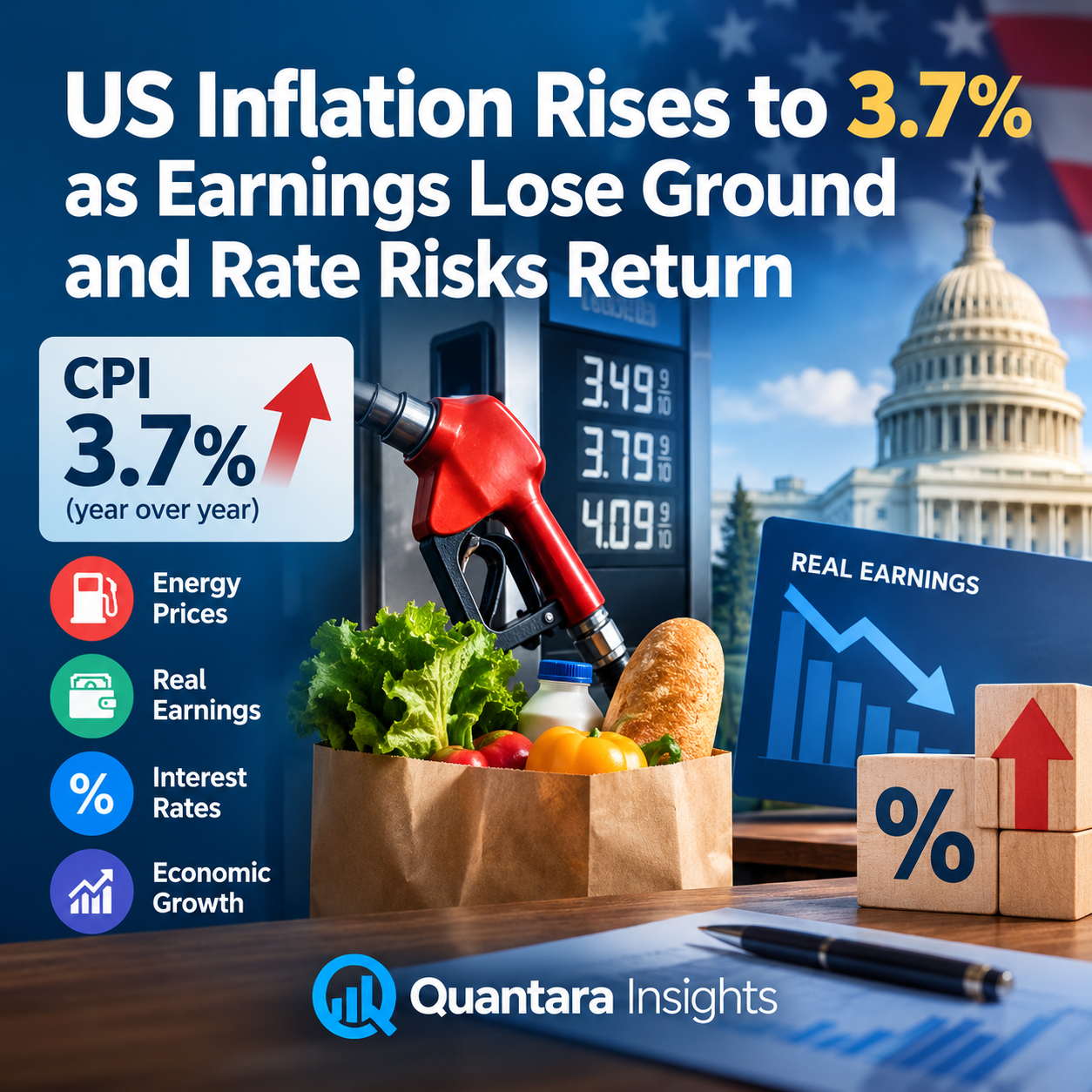
Recent US CPI and PPI data reinforced concerns that inflation remains stubbornly elevated.
Headline CPI accelerated while core inflation metrics also moved higher than expected. Services inflation, in particular, remains problematic because it tends to stay elevated longer than goods inflation.
The economic report data showed:
| Inflation Metric | Latest Reading |
|---|---|
| Headline CPI | 3.8% |
| Core CPI | 2.8% |
| Supercore Inflation | 3.4% |
| Core PPI | 5.2% |
These numbers suggest inflation pressures remain deeply embedded in the economy.
Why Sticky Inflation Matters
Sticky inflation creates major problems for policymakers because it limits the ability of central banks to cut interest rates.
If inflation remains elevated:
- Borrowing costs stay higher
- Mortgage rates remain elevated
- Consumer spending slows
- Business investment weakens
- Economic growth may deteriorate
This economic report cycle is therefore critical for determining whether inflation is becoming more entrenched.
Global PMIs Will Reveal Economic Momentum
PMIs Are Critical Leading Indicators
PMIs remain one of the most important economic report indicators because they provide early insight into business activity and economic momentum.
Purchasing Managers’ Index data helps investors understand:
- Manufacturing activity
- Services sector growth
- Hiring trends
- Input costs
- Business confidence
Weak PMIs may indicate slowing growth, while strong PMIs could suggest economies remain resilient despite high interest rates.
European PMIs Show Growing Weakness
European economic conditions remain fragile as higher energy costs continue pressuring businesses and consumers.
Recent PMIs revealed:
- Slower manufacturing activity
- Weak services demand
- Rising input costs
- Declining business sentiment
The European Central Bank remains trapped between persistent inflation and weak economic growth.
This creates growing stagflation concerns within the eurozone.
UK PMIs Reflect Inflation Challenges
UK PMIs continue showing elevated cost pressures tied to wages and transportation expenses. Businesses are struggling with:
- Rising salary costs
- Fuel surcharges
- Higher financing costs
- Weak consumer demand
The Bank of England remains highly sensitive to these inflation signals because services inflation remains especially sticky.
The upcoming PMI releases in this economic report could significantly alter UK rate expectations.
Central Banks Face Difficult Decisions
RBA Maintains Hawkish Position
The Reserve Bank of Australia continues maintaining a firm inflation-fighting stance after raising interest rates again.
The RBA warned that:
- Inflation may stay elevated until 2027
- Energy shocks remain a threat
- Fiscal stimulus may worsen inflation
- Labor markets remain tight
Australian employment data this week could therefore become extremely important for rate expectations.
Strong jobs numbers may increase the probability of additional tightening.
Bank of England Under Pressure
The Bank of England remains caught between slowing growth and persistent inflation.
Recent UK inflation trends suggest:
- Core inflation remains elevated
- Services inflation is sticky
- Wage growth remains concerning
- Energy costs continue rising
This economic report cycle could significantly influence whether markets begin pricing additional rate hikes.
Bank of Japan Moves Closer to Tightening
Japan’s inflation data is becoming increasingly important because the Bank of Japan may finally move toward policy normalization.
Several factors are driving Japanese inflation:
- Weak yen
- Rising import costs
- Higher energy prices
- Strong producer inflation
Markets are watching closely for signs that services inflation is becoming more durable.
A stronger inflation reading could strengthen expectations for future rate hikes.
Chinese Economic Data Signals Mixed Conditions
Chinese Trade Data Was Surprisingly Strong
China delivered stronger-than-expected trade data recently, supported by:
- Technology demand
- AI-related exports
- Front-loaded shipments
- Semiconductor demand
However, underlying domestic demand remains softer than expected.
This economic report highlights the growing divergence between external demand and internal economic weakness.
China Inflation Shows Cost-Push Pressures
Chinese inflation surprised higher mainly because of:
- Energy prices
- Transportation costs
- Rising industrial input prices
However, food prices remain weak, signaling domestic consumption still lacks momentum.
The People’s Bank of China may therefore remain cautious about major policy changes.
Energy Markets Remain a Major Global Risk
Geopolitical Tensions Are Driving Energy Prices
Energy remains one of the most important themes in this economic report because geopolitical tensions continue disrupting supply chains.
Key concerns include:
- Strait of Hormuz risks
- Middle East conflict escalation
- Oil supply disruptions
- Shipping route instability
Higher energy prices feed directly into global inflation expectations.

Why Energy Impacts Every Market
Energy affects nearly every sector of the economy:
- Transportation
- Manufacturing
- Agriculture
- Consumer goods
- Airline travel
- Industrial production
Persistent energy inflation can therefore significantly weaken economic growth while simultaneously keeping inflation elevated.
This is the classic stagflation risk central banks fear most.
US Consumer Spending Remains Surprisingly Strong
Retail Sales Continue Supporting Growth
Recent US retail sales data showed consumers continue spending despite:
- Higher gasoline prices
- Elevated borrowing costs
- Sticky inflation
- Rising credit card balances
Strong spending continues supporting economic resilience.
However, economists warn that:
- Savings are declining
- Fuel costs are rising
- Consumer fatigue may emerge
- Wage growth could slow
The sustainability of consumer demand remains a major question within this economic report cycle.
Trump-Xi Meeting Adds Another Layer of Complexity
US-China Relations Remain Critical
The latest Trump-Xi discussions produced constructive headlines regarding:
- Trade cooperation
- Agricultural purchases
- Boeing orders
- Market access
However, major tensions remain unresolved, particularly involving:
- Taiwan
- Technology restrictions
- Tariffs
- National security concerns
Markets continue monitoring geopolitical developments closely because they directly affect supply chains, technology investment and global growth expectations.
Market Outlook for the Week Ahead
Stocks Could Experience Elevated Volatility
This economic report week contains multiple high-impact events capable of moving markets sharply.
Potential volatility catalysts include:
- Nvidia earnings
- US inflation data
- PMIs
- Central bank commentary
- Energy price swings
Technology stocks may remain especially sensitive to Nvidia results.
Bond Markets Face Inflation Risks
Bond yields could remain elevated if inflation data continues surprising to the upside.
Persistent inflation typically leads to:
- Higher Treasury yields
- Tighter financial conditions
- Stronger US dollar
- Weaker equity valuations
Fixed-income investors remain highly sensitive to every inflation-related economic report release.
Currency Markets React to Central Banks
Foreign exchange markets are likely to remain volatile due to diverging central bank expectations.
Currencies most sensitive this week include:
- Japanese yen
- British pound
- Australian dollar
- Canadian dollar
- US dollar
Inflation and labor market data could heavily influence short-term currency movements.
Economic Report Key Themes Investors Must Watch
1. Nvidia Earnings
Will AI demand continue accelerating?
2. Inflation Persistence
Are higher energy prices spreading into broader inflation?
3. PMIs
Is global economic growth slowing further?
4. Central Bank Policy
Will policymakers maintain a hawkish stance?
5. Energy Market Volatility
Could geopolitical tensions worsen inflation risks?
Frequently Asked Questions
Why is this economic report important?
This economic report is important because it combines major inflation releases, Nvidia earnings, PMIs and central bank developments that could significantly impact global markets.
Why are Nvidia earnings so closely watched?
Nvidia is viewed as the leader of the AI investment boom. Its earnings help investors measure technology spending and broader economic confidence.
What are PMIs?
PMIs, or Purchasing Managers’ Indexes, measure business activity in manufacturing and services sectors. They are key indicators of economic growth.
Why are energy prices affecting inflation?
Higher energy prices increase transportation and production costs across the economy, which can lead to broader inflation pressures.
How could inflation impact interest rates?
Persistent inflation may force central banks to keep interest rates higher for longer or potentially raise rates further.
What is the biggest market risk right now?
The biggest market risk remains the combination of sticky inflation, slowing growth and rising energy prices creating stagflation concerns.
Conclusion
Economic report developments this week could become a major turning point for global financial markets. Nvidia earnings, inflation data, PMIs and energy market volatility are all converging simultaneously, creating one of the most important macroeconomic weeks of the year.
Investors are searching for answers to several critical questions:
- Is inflation becoming entrenched?
- Will central banks stay hawkish?
- Can economic growth remain resilient?
- Will AI investment continue accelerating?
- Could energy prices trigger stagflation risks?
The answers emerging from this economic report cycle will likely shape market direction for the coming months.

With inflation pressures still elevated, PMIs weakening in several regions and energy prices remaining unstable, markets may continue experiencing elevated volatility.
At the same time, Nvidia earnings could either reinforce confidence in the AI-driven growth narrative or trigger renewed concerns about stretched valuations and slowing momentum.
For investors, policymakers and businesses alike, this economic report week represents a critical moment for assessing the future direction of inflation, interest rates, growth and global financial markets.