
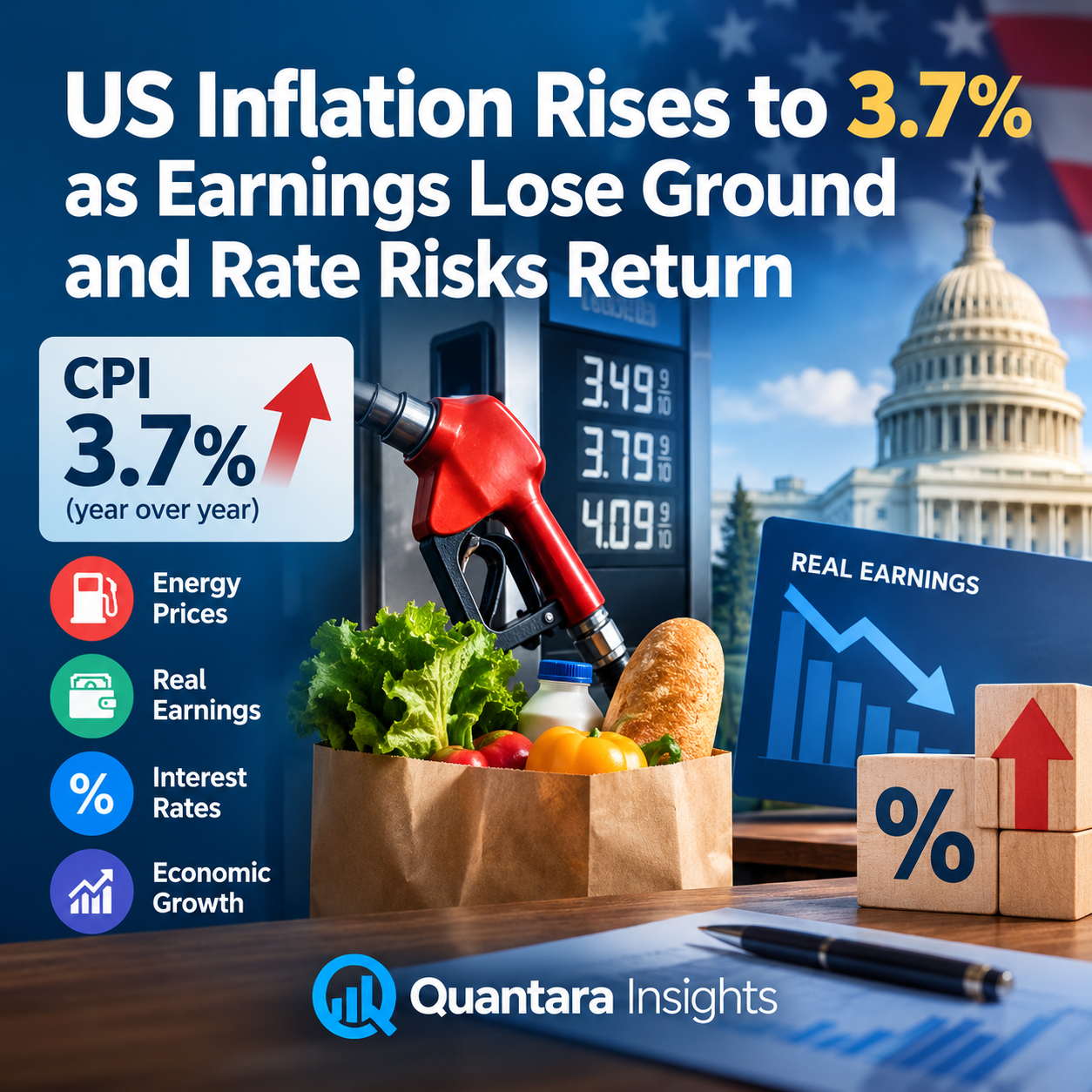
CPI inflation accelerated sharply in April 2026, signaling that inflation pressures inside the U.S. economy remain stronger than many investors and policymakers expected. Rising energy prices, stubborn shelter costs, and renewed pressure across food categories pushed the Consumer Price Index higher and reignited concerns surrounding interest rates, the Federal Reserve, and the future direction of the USD.
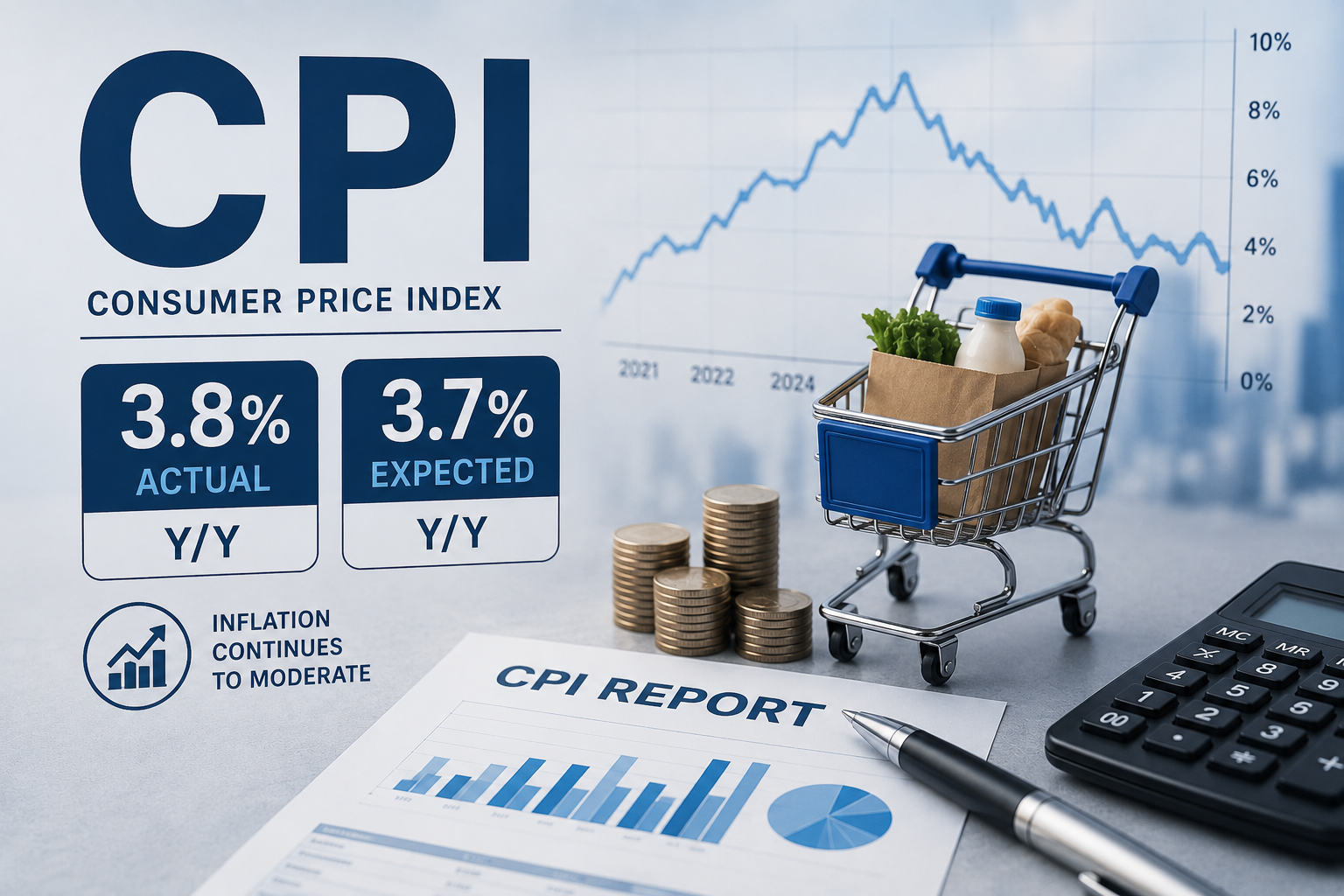
The latest Consumer Price Index report showed the headline CPI increasing 0.6% month over month while annual CPI inflation climbed to 3.8%. Energy prices alone accounted for more than 40% of the monthly increase, highlighting just how important oil, gasoline, and electricity costs remain to the broader inflation picture.
For markets, the report delivered a major warning. Investors had been hoping inflation would continue cooling throughout 2026, potentially allowing the Federal Reserve to begin cutting interest rates later this year. Instead, this CPI report suggests inflation remains deeply embedded in several sectors of the economy.
The combination of rising CPI inflation, stronger energy prices, elevated shelter costs, and weakening real earnings is creating a difficult environment for consumers and policymakers alike. Meanwhile, the USD may remain supported if the Federal Reserve is forced to maintain higher interest rates for longer than expected.

What the Latest CPI Report Revealed
The April 2026 CPI report showed inflation accelerating faster than economists anticipated. The headline Consumer Price Index rose 0.6% on a seasonally adjusted basis after increasing 0.9% in March. Annual CPI inflation climbed to 3.8%, up from 3.3% previously.
Several categories contributed to the increase:
| Category | Monthly Change | Annual Change |
|---|---|---|
| CPI All Items | +0.6% | +3.8% |
| Energy | +3.8% | +17.9% |
| Gasoline | +5.4% | +28.4% |
| Food | +0.5% | +3.2% |
| Shelter | +0.6% | +3.3% |
| Core CPI | +0.4% | +2.8% |
Energy inflation remained the dominant driver. Gasoline prices rose sharply while electricity prices also moved higher. Consumers continue facing pressure at gas stations, grocery stores, and housing markets simultaneously.
The report also showed core inflation remaining elevated. Core CPI, which excludes food and energy, increased 0.4% during the month and 2.8% annually. That suggests inflation pressures are no longer limited to volatile commodity categories alone.
Energy Prices Are Driving Inflation Higher Again
The biggest story inside the CPI report was the resurgence in energy inflation.
The energy index rose 3.8% during April after climbing 10.9% in March. Gasoline prices increased 5.4% in a single month and were up 28.4% over the past year. Electricity costs also continued moving higher.
This matters because energy inflation spreads rapidly throughout the economy.
When gasoline prices rise:
- Transportation costs increase
- Shipping expenses climb
- Manufacturing becomes more expensive
- Consumer spending weakens
- Food prices often follow higher
Energy inflation acts almost like a hidden tax on households and businesses. Consumers must spend more on essentials, leaving less disposable income available for discretionary purchases.
The rise in energy prices also complicates monetary policy for the Federal Reserve. Central banks cannot directly produce more oil or lower gasoline prices. However, they can attempt to reduce demand by keeping interest rates elevated.
That creates a dangerous balancing act.
If the Federal Reserve tightens too aggressively, economic growth could slow sharply. But if policymakers ease too early, inflation could accelerate even further.
Shelter Inflation Remains a Major Problem
Housing costs continue to keep CPI inflation elevated.
The shelter index increased another 0.6% in April and remains one of the largest contributors to overall inflation. Owners’ equivalent rent and rent both increased 0.5% for the month.
Shelter inflation is especially important because housing represents the largest component inside the CPI basket. Even modest monthly increases can heavily influence the broader inflation reading.
High mortgage rates, limited housing supply, and elevated rental demand continue pushing housing costs higher across much of the United States.
This creates a difficult situation:
- Higher interest rates raise mortgage payments
- Elevated mortgage rates reduce affordability
- Limited supply keeps prices elevated
- Rent inflation remains sticky
As a result, even if energy inflation eventually cools, shelter inflation may continue supporting higher CPI readings throughout 2026.
Food Inflation Is Returning to the Spotlight
Food inflation also accelerated during April.
The food index rose 0.5% while food-at-home prices increased 0.7%. Several grocery categories posted meaningful gains, including meats, fruits, vegetables, and beverages.
Some notable increases included:
- Beef prices up 2.7%
- Fruits and vegetables up 1.8%
- Nonalcoholic beverages up 1.1%
- Coffee prices continuing higher
- Restaurant prices rising again
Consumers continue feeling inflation pressure every time they visit grocery stores or restaurants.
Food inflation tends to have a major psychological impact because households notice it immediately. Even when broader inflation indicators improve, rising grocery prices can keep consumer sentiment weak.
For lower-income households especially, food and energy inflation can severely reduce purchasing power.
Real Earnings Are Falling Behind Inflation
One of the most concerning developments accompanying higher CPI inflation is the decline in real earnings.
According to the latest real earnings report, real average hourly earnings for all employees decreased 0.5% from March to April.
Although wages continued rising nominally, inflation increased faster than earnings growth.
That means many workers are effectively losing purchasing power despite earning larger paychecks.
The report showed:
| Metric | Monthly Change |
|---|---|
| Average Hourly Earnings | +0.2% |
| CPI Inflation | +0.6% |
| Real Hourly Earnings | -0.5% |
This trend matters enormously for the broader economy.
When inflation rises faster than wages:
- Consumers reduce discretionary spending
- Savings rates decline
- Credit card debt often increases
- Economic growth can weaken
- Consumer confidence falls
Persistent CPI inflation combined with weakening real wages can eventually create a slowdown in consumer-driven economic activity.
What This Means for Interest Rates
The latest CPI inflation report significantly complicates the outlook for interest rates.
Before the release, many investors expected the Federal Reserve to begin considering interest rate cuts later in 2026. However, stronger-than-expected CPI inflation may delay that timeline considerably.
Federal Reserve policymakers remain highly focused on inflation stability. A reacceleration in CPI inflation likely increases concern that inflation pressures could become entrenched again.
Several factors may now keep interest rates elevated:
1. Persistent Core Inflation
Core CPI remains above the Federal Reserve’s long-term inflation target.
2. Rising Energy Prices
Energy inflation can spread throughout the economy quickly.
3. Sticky Shelter Inflation
Housing costs continue rising despite previous tightening efforts.
4. Strong Labor Markets
Employment remains relatively resilient overall.
As a result, markets may need to adjust expectations for future interest rate cuts.
Higher-for-longer interest rates could impact:
- Mortgage markets
- Commercial real estate
- Corporate borrowing
- Consumer loans
- Equity valuations
- Banking conditions
The Federal Reserve now faces renewed pressure to maintain restrictive policy longer than investors anticipated earlier this year.
How CPI Inflation Impacts the USD
The CPI report also carries major implications for the USD.
Historically, higher inflation combined with elevated interest rates can strengthen the U.S. dollar because investors seek higher yields in dollar-denominated assets.
If the Federal Reserve keeps interest rates elevated:
- Treasury yields may remain attractive
- Foreign capital could continue flowing into USD assets
- The USD may remain relatively strong globally
However, there is also a longer-term risk.
If inflation remains persistently elevated while economic growth slows, confidence in the broader economy could weaken over time. That scenario can eventually pressure the USD despite higher interest rates.
For now, though, markets appear focused on the likelihood that the Federal Reserve may delay rate cuts because of stronger CPI inflation.
Financial Markets React to the CPI Report
Markets reacted quickly to the hotter-than-expected CPI inflation data.
Treasury yields moved higher as investors adjusted expectations for Federal Reserve policy. Equity markets initially experienced volatility while traders reassessed valuation assumptions and interest rate forecasts.
Sectors especially sensitive to interest rates saw increased pressure, including:
- Technology stocks
- Real estate
- Utilities
- Growth equities
- Small-cap companies
Meanwhile, energy-related sectors benefited from rising oil and gasoline prices.
The CPI report reinforced a critical reality for investors: inflation remains one of the most important variables influencing financial markets in 2026.

Why the Federal Reserve Cannot Ignore CPI Inflation
The Federal Reserve’s primary mandate includes maintaining price stability. Persistent CPI inflation threatens that objective directly.
Central bankers understand that inflation can become self-reinforcing if expectations rise too high.
For example:
- Workers demand higher wages
- Businesses increase prices
- Consumers expect future inflation
- Spending patterns shift
- Inflation persistence increases
This is why policymakers often react aggressively when inflation begins accelerating unexpectedly.
The latest CPI report increases the probability that Federal Reserve officials maintain a cautious stance regarding monetary easing throughout the remainder of 2026.
Could Inflation Continue Rising in 2026?
Several risks could keep CPI inflation elevated moving forward.
Energy Market Volatility
Oil markets remain highly sensitive to geopolitical developments and supply disruptions.
Housing Supply Constraints
Limited housing inventory continues supporting shelter inflation.
Consumer Demand
Strong spending can maintain upward pressure on prices.
Global Supply Chain Risks
Shipping disruptions and trade tensions could increase costs again.
Labor Costs
Wage growth may continue feeding service-sector inflation.
While inflation has cooled substantially from peak pandemic-era levels, the April CPI report suggests the disinflation process may not move in a straight line.
Consumers Continue Feeling Inflation Pressure
For households, the latest CPI inflation data confirms what many consumers already feel daily.
Essential costs continue climbing:
- Gasoline
- Electricity
- Rent
- Groceries
- Insurance
- Transportation
Even moderate inflation can create significant financial stress when wages fail to keep pace.
Lower-income households remain particularly vulnerable because necessities account for a larger share of monthly spending.
The decline in real earnings further increases pressure on household budgets.
The Broader Economic Outlook
The broader economic outlook now depends heavily on whether CPI inflation begins moderating again during the coming months.
Several possible scenarios could emerge:
| Scenario | Outcome |
|---|---|
| Inflation Falls | Rate cuts become possible |
| Inflation Stays Elevated | Higher rates persist |
| Inflation Accelerates | Additional tightening risk |
| Growth Slows Sharply | Recession concerns increase |
The Federal Reserve will likely remain data-dependent while monitoring CPI inflation, employment trends, consumer spending, and financial conditions closely.
FAQs About CPI Inflation, Energy, Interest Rates, and USD
What is CPI inflation?
CPI inflation measures the average change in prices consumers pay for goods and services over time.
Why did CPI inflation rise in April 2026?
Energy prices, shelter costs, and food inflation contributed heavily to the increase.
How do energy prices affect inflation?
Higher energy costs increase transportation, manufacturing, and consumer expenses throughout the economy.
Why are interest rates connected to CPI inflation?
The Federal Reserve uses interest rates to help control inflation and stabilize economic activity.
How does CPI inflation affect consumers?
Higher inflation reduces purchasing power and increases the cost of everyday necessities.
What does CPI inflation mean for the USD?
Persistent inflation and higher interest rates can strengthen the USD in the short term.
Could the Federal Reserve still cut interest rates in 2026?
It remains possible, but stronger CPI inflation may delay any future rate cuts.
Why are real earnings declining?
Inflation is increasing faster than wage growth, reducing purchasing power for workers.
Conclusion
The latest CPI inflation report delivered a powerful reminder that inflation pressures remain deeply embedded throughout the U.S. economy. Rising energy prices, persistent shelter inflation, and weakening real earnings are creating renewed challenges for consumers, businesses, investors, and policymakers.
The Federal Reserve now faces a difficult path forward as it attempts to balance inflation control with economic stability. Interest rates may remain elevated longer than markets previously expected, while the USD could continue finding support from higher Treasury yields.
Most importantly, the April CPI data reinforces a critical reality: inflation remains one of the defining economic forces shaping markets and consumer behavior in 2026.
As energy prices fluctuate, housing costs remain elevated, and monetary policy evolves, investors and consumers alike will continue watching every CPI report closely for signals about the future direction of inflation, interest rates, and the broader economy.