









Week Ahead Economic Reports Signal a Turning Point for 2026
Week ahead economic reports arrive at a moment of rare global alignment, where elections, inflation data, labor market signals, and growth figures converge across major economies. Between 9 and 14 February 2026, policymakers and markets face a compressed window of information that may define central bank policy, capital flows, and risk sentiment for the rest of the year.
This is not a routine calendar week. It is a macro inflection point, testing whether the post-pandemic and post-geopolitical shock economy is moving toward stabilization — or entering a new phase of divergence.
From Japan’s snap election and wage data, to U.S. CPI and employment, to China’s deflationary pressures and fragile UK growth, the week ahead global economic reports form a tightly interconnected narrative. Decisions and signals delivered now will determine whether 2026 evolves into a year of coordinated easing, prolonged restriction, or renewed inflation risk.
This analysis breaks down the most consequential week-ahead global economic reports, explains why they matter, and outlines the strategic implications for central banks, markets, and investors.

Part I: Asia Sets the Tone for the Week Ahead Global Economic Reports
Japan’s Dual Test: Wages and Political Mandate
Asia opens the week ahead global economic reports with two events that are inseparable in impact:
- December Average Cash Earnings
- Japan’s snap Lower House election
Together, they will determine whether Japan’s long-awaited exit from deflation is sustainable — and whether political leadership can support that transition.
Wage Growth: The Final Condition for BoJ Normalization
Japan’s wage data is one of the most important week ahead global economic reports, not just domestically but globally.
Consensus expectations point to headline wage growth accelerating to 1.0% year-over-year, up from 0.5%. Markets are watching for something more critical: a sustained improvement in real wages.
A durable rise in base pay would confirm that corporate Japan is committing to permanent wage increases, forming the foundation of a true wage–price cycle.
Why This Matters for Central Bank Policy 2026
The Bank of Japan has already taken historic steps by exiting negative rates and yield curve control. However, officials have made it clear that future tightening depends on wages, not inflation alone.
- Strong wage growth increases the probability of a second BoJ rate hike in Q2 2026
- Weak momentum risks renewed yen depreciation and delayed normalization
Given Japan’s role as the world’s largest creditor nation, any BoJ shift directly impacts global bond yields, currency hedging costs, and cross-border capital flows.
Japan’s Snap Election: Fiscal Signals the Market Cannot Ignore
The snap election adds a political layer to the week ahead global economic reports.
A strong mandate would likely accelerate fiscal spending on:
- Defense
- Industrial policy
- Technology resilience
- Social support
Markets would likely price:
- Steeper Japanese yield curves
- Short-term yen weakness
- Stronger domestic equities
A fragmented or surprise outcome would inject uncertainty, raising concerns over fiscal sustainability and complicating BoJ policy.
Part II: U.S. Data Dominates the Week Ahead Global Economic Reports
U.S. Labor Market: Cooling or Just Normalizing?
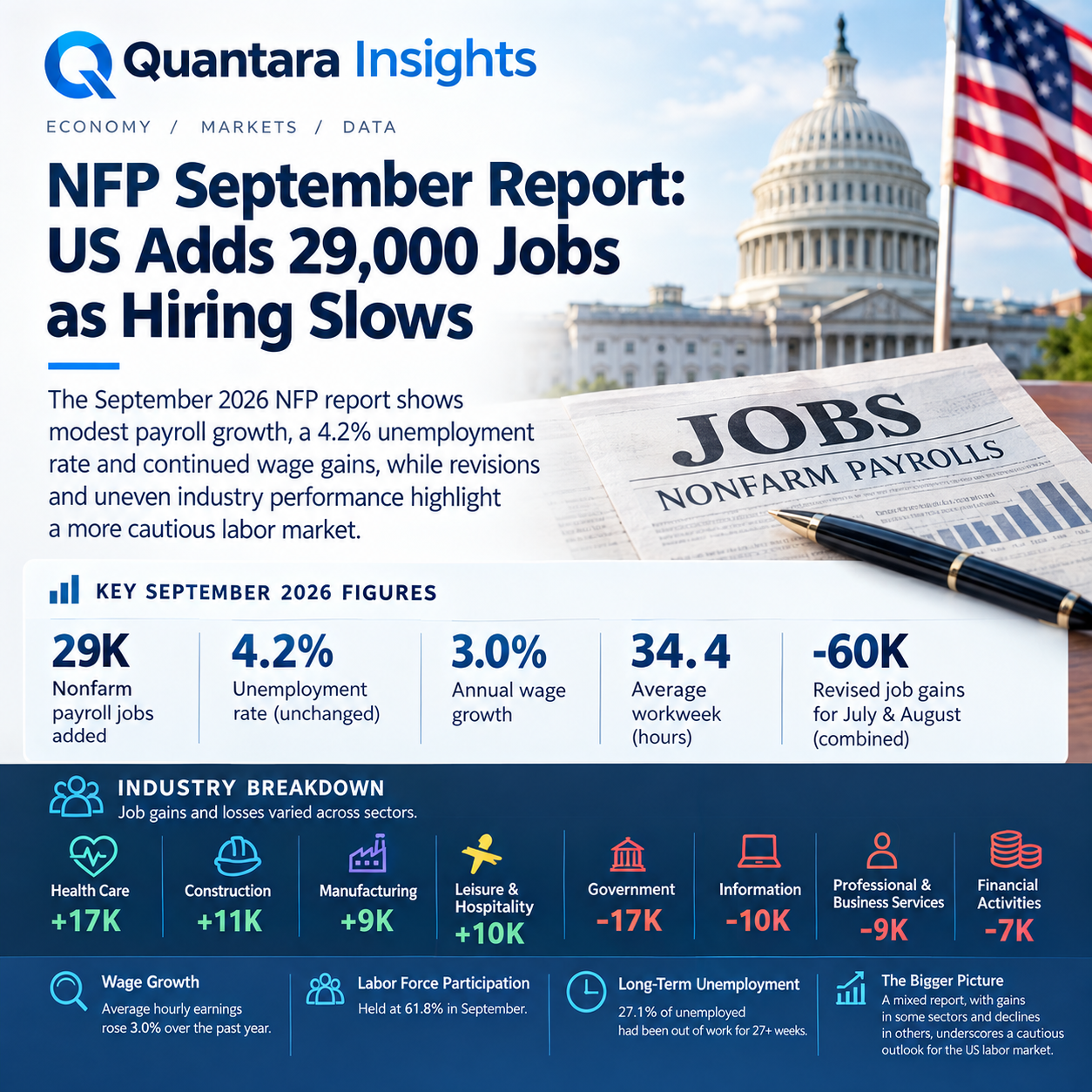
The U.S. employment report remains one of the most market-sensitive week ahead global economic reports.
Payroll growth is expected to moderate, while unemployment stabilizes near 4.4%. Beneath the surface, however, the dynamics are shifting.
Key areas of focus include:
- Annual benchmark revisions
- Hiring freezes replacing layoffs
- Gradual deceleration in wage growth
The Federal Reserve is increasingly focused on labor market balance, not headline job creation.
CPI: The Defining Inflation Test of the Week
The January CPI release is the centerpiece of the week ahead global economic reports.
While inflation has moderated, the Fed continues to flag goods inflation linked to tariffs as a lingering risk. Markets will scrutinize:
- Core services inflation
- Shelter disinflation trends
- Non-housing services persistence
A clear downward trajectory would strengthen expectations for rate cuts in late 2026. A surprise reacceleration would force a sharp repricing across bonds, equities, and currencies.
Part III: UK and Europe Face Growth Constraints
UK GDP: Momentum or Stagnation?
The UK’s preliminary Q4 GDP print is expected to show minimal growth near 0.1%.
For markets and policymakers, the composition matters more than the headline:
- Services-led growth suggests inflation risk
- Industrial rebounds are viewed as transitory
A weak print would intensify pressure on the Bank of England to ease earlier than expected.
Eurozone Wage Data and ECB Dilemmas
European wage growth remains the main obstacle to ECB easing. Any moderation during the week ahead global economic reports would ripple across European bond and equity markets.
Part IV: China’s Deflationary Undercurrent
China’s inflation data highlights a stark contrast within the week ahead global economic reports.
While Western economies battle residual inflation, China faces:
- Weak domestic demand
- Industrial overcapacity
- Prolonged producer price deflation
Persistent Chinese disinflation:
- Dampens global commodity prices
- Offsets Western inflation pressures
- Reinforces expectations for further policy support
China’s response will shape global trade and growth dynamics throughout 2026.

Part V: Energy Markets and Central Bank Signals
Oil market assessments offer insight into global demand conditions.
- Weak demand reinforces disinflation narratives
- Strong demand risks reigniting price pressures
Meanwhile, central banks continue to stress caution, navigating the challenge of separating cyclical weakness from structural change.
Strategic Takeaways From the Week Ahead Global Economic Reports
This week creates several high-impact dynamics:
1. Policy Divergence
Japan normalization versus potential U.S. easing reshapes currency trends.
2. Bond Market Fragmentation
Japanese yields face upward pressure while U.S. Treasuries may rally.
3. Equity Rotation
Regional leadership shifts based on growth and policy expectations.
4. Commodity Sensitivity
China remains the swing factor for global demand.
Conclusion: Why This Week Ahead Matters
The week ahead global economic reports represent more than scheduled data releases. They reflect a moment where political decisions, inflation trends, and growth constraints intersect.
This week will:
- Test Japan’s post-deflation strategy
- Validate or challenge U.S. disinflation
- Reveal the depth of China’s slowdown
- Expose the fragility of UK and European growth
For policymakers, this is a test of credibility and timing. For investors, it is a reminder that macro awareness and flexibility remain essential.
The signals delivered this week will shape not only the trajectory of 2026 — but the next chapter of the global economic cycle.